The Difference Between Conical and Radial Carbide Mining Bits for Continuous Miner Applications
Continuous miners working coal seams run through bits at a rate that makes bit selection one of the more consequential ongoing decisions in underground coal production. Get it right and the bits last a reasonable number of shifts, coal output stays predictable, and the maintenance crew isn’t swapping cutterhead tooling every time the machine stops. Get it wrong and the bits wear out ahead of schedule, the cutterhead generates excessive heat, and the coal fragmentation isn’t what it should be.
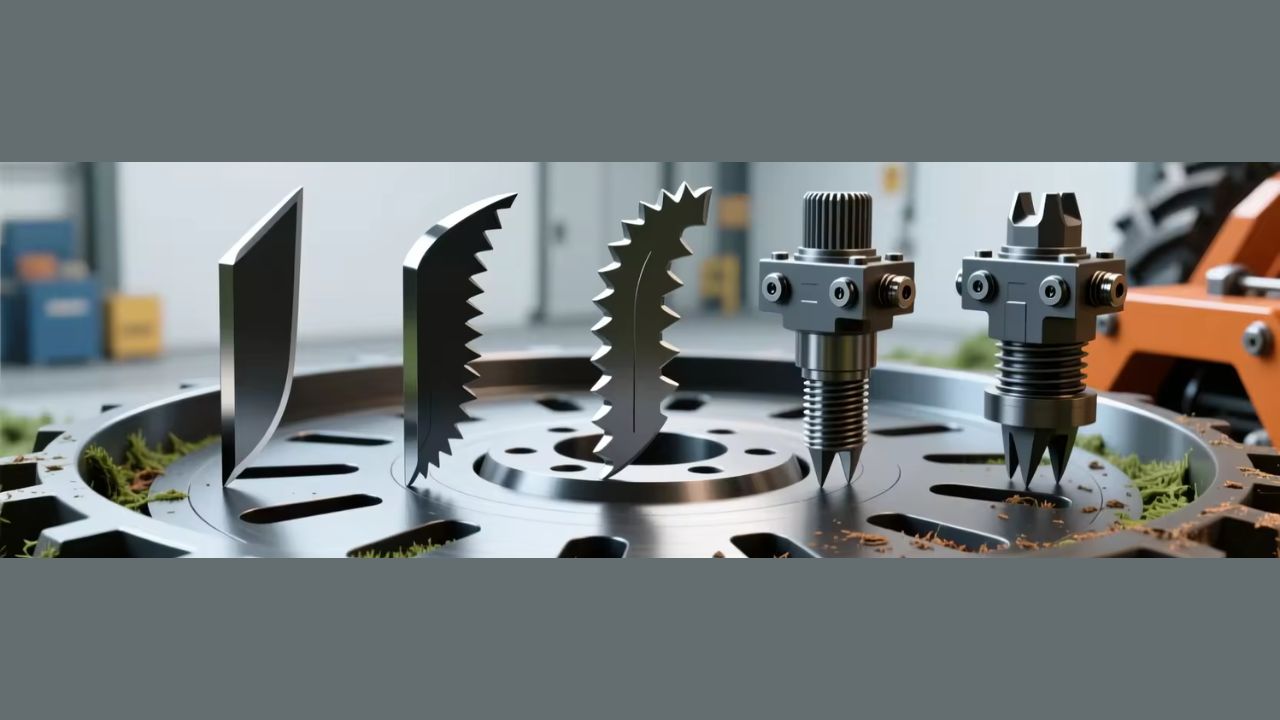
The two primary bit geometries in continuous miner service are conical bits and radial bits. They’re not interchangeable, and picking the wrong one for the seam conditions produces the kind of chronic underperformance that gets attributed to bit quality rather than to the geometry mismatch that’s actually causing it.
What Conical Bits Do
A conical bit mounts in a round shank tool holder designed to rotate the bit around its own axis as it contacts the coal face. The rotation is passive — the bit spins freely in the holder and turns incrementally each time it contacts material, driven by the asymmetric force distribution around the point as the bit works into the seam.
The rotation is what makes conical bits effective in continuous miner applications. Because the bit rotates, the wear is distributed around the full circumference of the tungsten carbide tip rather than concentrated on the leading face. A bit that doesn’t rotate wears a flat on one side and loses its cutting geometry within a fraction of the service life it would deliver with rotation. A properly rotating conical bit wears the tip symmetrically, maintaining a point geometry that stays sharp throughout the wear cycle.
Conical bits perform well in coal seams with moderate hardness and in conditions where the coal cleats — the natural fracture planes in the seam — allow the point geometry to exploit the existing fracture pattern. In bituminous coal seams with good cleat development, a conical bit working into the cleats produces efficient fragmentation with relatively low cutting force and good bit rotation.
The limitation of conical bits is in hard inclusions. A bit rotating in its holder doesn’t handle sudden lateral loads from sandstone intrusions or pyrite nodules as well as a rigidly mounted bit does. When the point contacts a hard inclusion, the impact load can arrest the rotation and concentrate the cutting force on a fixed face position — which produces the flat-wear pattern that conical bits are supposed to avoid, but now from impact rather than from a blocked holder.
What Radial Bits Do
Radial bits mount with a fixed orientation — the cutting face presents to the coal at a consistent angle and doesn’t rotate in service. The bit body is typically shaped to position the carbide insert at a specific rake angle relative to the cutterhead rotation, and that angle is what defines how the bit engages the coal face.
Because radial bits don’t rely on rotation to distribute wear, their wear pattern is consistent: the leading face of the carbide insert takes the primary wear load, and the bit’s service life is determined by how long that face geometry remains effective. This is less efficient than the distributed wear of a properly rotating conical bit in clean coal, but it’s more predictable in mixed conditions.
Radial bits handle hard inclusions better than conical bits in most applications. The fixed mounting transmits lateral loads more directly into the cutterhead rather than through a rotating holder, which means the bit is less likely to suffer the impact-arrest wear pattern that hurts conical bits in inclusion-heavy seams. For continuous miners working seams with significant rock bands, pyrite, or other hard intrusions, radial bits typically deliver more consistent service life than conicals, even if the per-bit life in clean coal would favor the conical geometry.
Seam Conditions That Favor Each Geometry
The seam characteristics that push a selection toward conical bits: moderate hardness coal with good cleat development, low inclusion content, relatively consistent seam thickness, and cutterhead penetration rates where bit rotation can develop properly. Thicker seams where the machine can work aggressively tend to favor conical bits because the cutting rates generate enough contact force to keep the bits rotating.
Seam characteristics that push toward radial bits: hard coal or metallurgical coal grades, high inclusion frequency, seams with significant floor heave or roof interaction, and thin seams where the cutterhead has to work at shallow penetration angles. High-silica roof or floor material that the machine can’t avoid also tips the balance toward radial bits, because the impact events from inadvertent rock contact are frequent enough to compromise conical bit rotation regularly.
Some operations run a mixed cutterhead — conical bits in positions that work primarily in coal, radial bits in the gauge positions that are more likely to contact the seam boundaries. This is worth evaluating in seams with consistent geology where the bit positions that see the most inclusion contact can be identified and assigned the more appropriate geometry.
The Carbide Grade Question
Geometry is one decision; carbide grade is the other. For carbide mining bits, the grade selection follows a similar logic to the geometry choice: harder grades offer better wear resistance in abrasive conditions but less toughness for impact events, while tougher grades handle impact better but wear faster in clean abrasive contact.
In conical bits, where rotation distributes the wear, a slightly harder grade is often appropriate because the point stays in consistent contact geometry longer and the wear mechanism is predominantly abrasive. In radial bits working inclusion-heavy seams, a tougher grade that handles the impact events without fracture typically outperforms a harder grade even if the per-shift wear rate is slightly higher — a bit that doesn’t fracture produces more total production than a harder bit that chips on rock contact and needs early removal.
The way to test this in operation is to run a trial section with the candidate grade change and track both wear rate and fracture frequency. Wear rate alone doesn’t capture the full picture — a bit that fractures once and needs removal has delivered far less production than its wear rate at removal would suggest.
Tracking Performance to Confirm the Selection
Neither geometry selection nor grade selection is a one-time decision. Seam conditions change as the mine advances, and a bit configuration that worked well in one section of the panel may underperform in another where the geology is different. Operations that track bit consumption per shift and inspect pulled bits for wear character — abrasive wear versus fracture — have the data to recognize when conditions have shifted and the selection needs to change.
Bit inspection at change-out is a five-minute check that most mines treat as optional. It shouldn’t be. The wear character at removal is the most direct evidence of what the seam is actually doing to the bits, and it’s the signal that tells you whether the current geometry and grade are matched to what the machine is encountering underground.