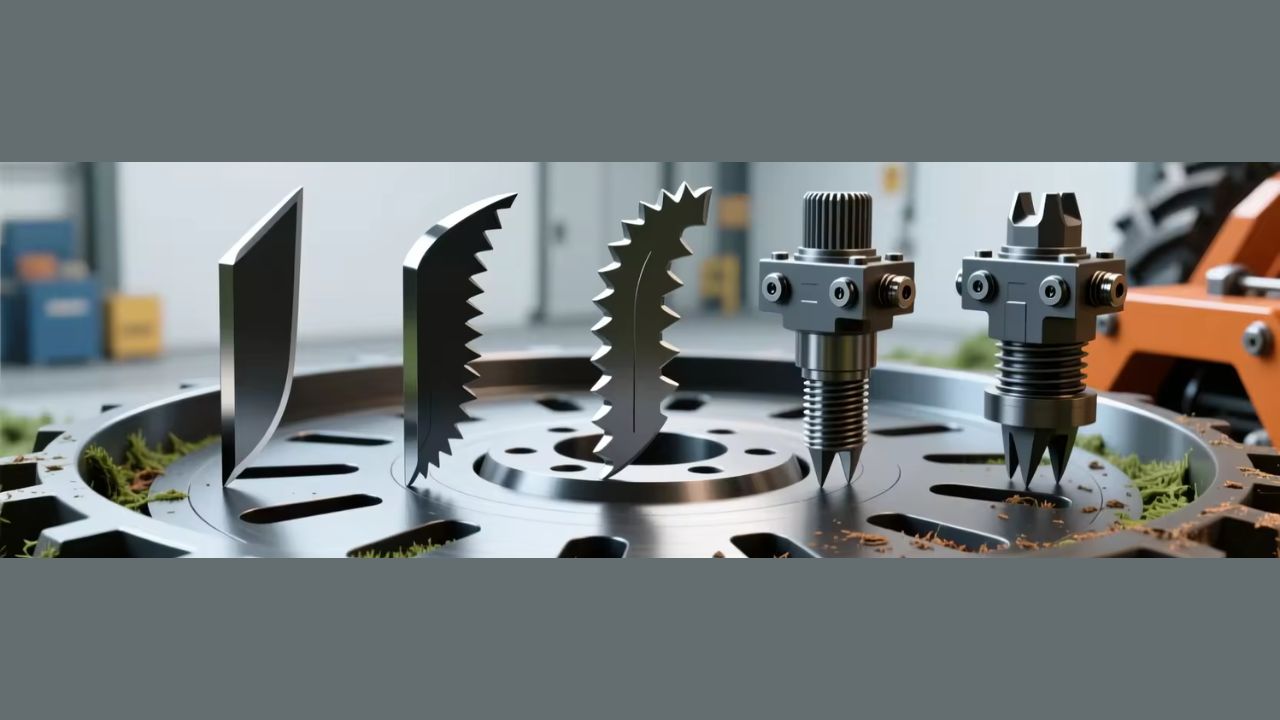
In the land clearing, forestry, and farming activities, the quality of the equipment component is of paramount importance to their efficiency and durability. The cutting tools that are attached to forestry mulchers and flail mowers are referred to as mulcher teeth, which have a critical role in dictating the level with which a particular machine will manage vegetation, trees, and stumps. Investment in quality aftermarket forestry mulcher teeth helps in increasing productivity as well as protecting the machines against overuse and damage. Companies such as JYF Machinery have created high-quality teeth that can last a long time and that are precision-engineered to show how profitable this investment can be.
Enhancing Cutting Efficiency and Speed
The increase in cutting efficiency is one of the most obvious effects of high-quality mulcher teeth. The type of design of mulcher teeth, the material, and durability determine the speed and efficiency with which a machine can brush, cut, and other vegetation. Superior teeth, especially those with carbide tips or hardened steel, have longer sharp edges and therefore do not require frequent halts in order to change worn parts.
This will help operators to accomplish land-clearing projects faster because they can maintain a steady cutting performance. The premium teeth installed on machines take fewer passes in the same area, which implies that labor and fuel are saved. These efficiency gains are directly translated into increased productivity and reduced cost of operations in operations where time is money.
Reducing Wear and Tear on Equipment
Mulcher teeth are also a protective mechanism of the machinery of the first line. Good quality teeth cushion most of the force and wear during operation and do not damage any other critical parts of the machine, like rotors, bearings, and drive systems. Under poor teeth application, cutting forces of hard or abrasive material are passed on to the machine, which consequently accelerates wear and the probability of mechanical breakdown.
These risks are addressed by investing in long-lasting mulcher teeth. Other materials, such as carbide and high-grade alloy steel, have been developed to withstand heavy operation and abrasive environments so that cutting edges can be used in very tough environments. This also prolongs the life of the equipment to minimize repair and replacement costs, thus minimizing the repair and replacement of the equipment.
Supporting Consistent Performance in Diverse Conditions
Multiple types of terrain and vegetation are usually seen in land-clearing projects. The machines can face soft soil, rocky areas, thick bushes, or tree-stands, and each presents cutting tools with its own challenge. Mulcher teeth of high quality are designed to work reliably under all these conditions. The design is such that they penetrate and shred the materials correctly and are able to maintain an optimal performance of the machine regardless of the environmental conditions.
There is predictability and reliability when the operator uses premium teeth. Regular performance not only enhances productivity, but the crews can also plan their projects better since they are certain that the equipment will be able to cope with the workload without such unexpected slowdowns or failures.
Cost-Effective Investment Over Time
Although the company might be spending a lot more money on the high-quality mulcher teeth than on generic teeth, it will have a lot more gains later. Fewer replacements, less wear on equipment, and shorter completion of projects will lead to time-savings in the long-term. In addition, the reduced downtime means that the operators will be able to sustain a constant workflow and deliver more projects and earn more money.
An example of such a product is JYF Machinery that provides mulcher teeth with a particular purpose to be durable and efficient. The teeth are interchangeable with large brands of mulching machines and ensure that workers do not have to make significant adjustments. The construction accuracy and development of high-quality materials also ensure the extended service duration, which makes the investment effective and economically beneficial.
Conclusion
The purchase of high-quality mulcher teeth is not just an upgrade of equipment, but a strategy that would enhance productivity, safeguard machines, and lower operational expenses. Operators can select more robust and well-designed teeth to guarantee higher cutting speed, reduce wear on costly machinery and also guarantee repeat consistency in harsh environments. The examples of such companies as JYF Machinery demonstrate the usefulness of this strategy as they provide teeth that are created to work in a long-term, efficient, and reliable way. To the forestry, agricultural, and land clearing specialists, the patina of the importance of spending on the best miller teeth is unmistakable: increased production, reduced maintenance expenses, and machines that stay untouched and reliable during the most difficult assignments.