Auto Diagnostic Tool Use Cases in Modern Vehicle Maintenance
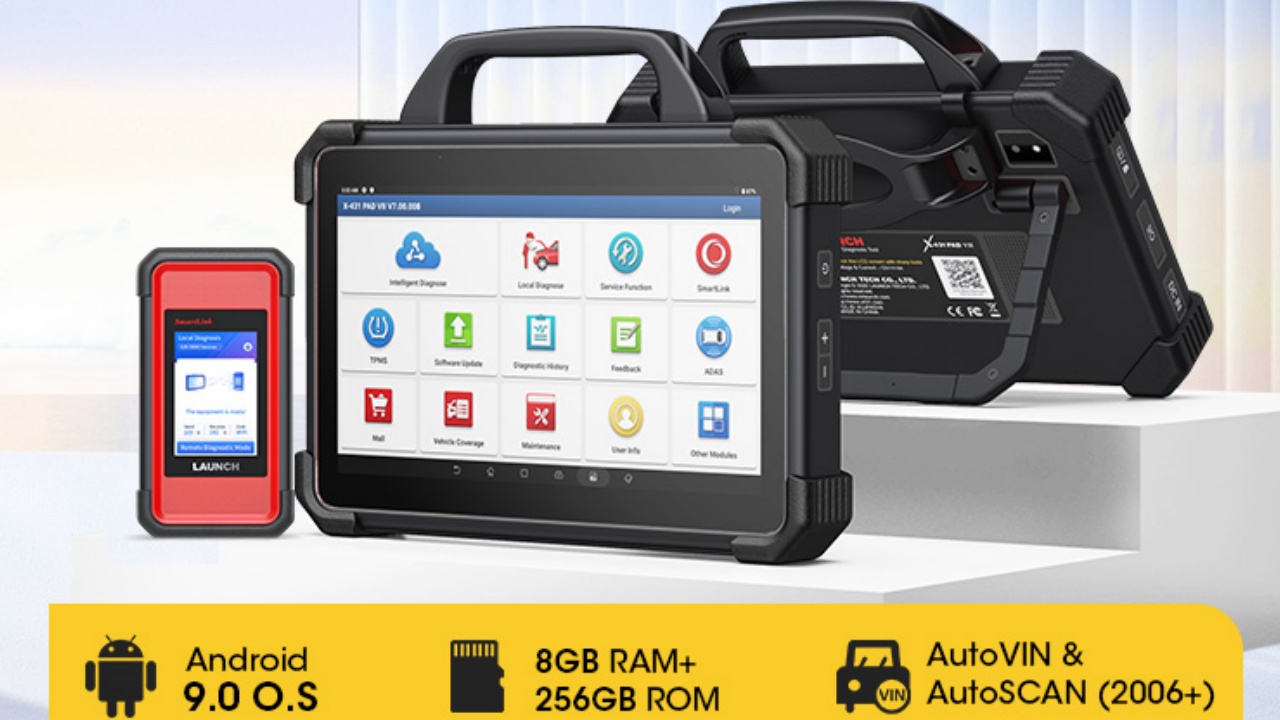
With technological advancements, vehicles today are extensively controlled by electronic systems for engine timing and other functions, including braking. With such technological advancements, a physical inspection might not suffice to establish the issue. An auto diagnostic tool can be used to check vehicle system data, read fault codes, and assess the level of communication between vehicle modules. Such auto diagnostic equipment has become essential in daily workshop activities.
Basic fault detection during routine checks
The most common application of auto diagnostic equipment is checking fault codes. The codes can be associated with engine problems, airbags, and other vehicle systems. Various diagnostic kits are used in such processes. One of the most popular is LAUNCH X431 PAD VII 7 ELITE, which scans and displays all the stored error codes in the system. Such a process is useful in identifying minor faults before they become bigger problems. At Lenkor, such diagnostic kits are provided with certified authentication.
Monitoring live vehicle data
In addition to fault codes, many mechanics also rely on live sensor data. It can include such details as engine temperature, fuel pressure, and oxygen sensor readings. The observation of these values can be useful to determine if a component works correctly. Fluctuations outside the normal range can suggest that additional investigation is necessary. This kind of testing is widely used during test drives or post-repair tests to assess the stability of the systems involved.
Checking communication between vehicle systems
The modern automobile contains several electronic control units. Their interaction allows performing various operations. Any communication problems can affect their performance. Therefore, diagnostic tools can help map the communication among components. This helps technicians avoid replacing parts without understanding the actual issue. In workshop environments supported by Lenkor through overseas warehousing and service channels, this type of system-level checking is part of standard diagnostic practice.
Resetting service indicators after maintenance
After routine maintenance such as oil changes or brake replacement, service lights often remain active. Diagnostic tools are used to reset these indicators so the vehicle records reflect the completed service. The process is simple but important, as it keeps maintenance history accurate and avoids confusion for future servicing. This function is widely used in both professional workshops and independent repair shops.
ECU programming and configuration tasks
Some repair cases require changes at the control unit level. This includes updating or reconfiguring electronic modules after replacement. Advanced tools like the LAUNCH X431 PAD VII 7 ELITE support ECU programming functions through standardized communication protocols. These operations are typically handled by trained technicians due to the sensitivity of system-level changes. Distribution networks such as Lenkor ensure that such equipment reaches workshops with proper product validation and post-purchase assistance.
Diagnosing intermittent or hidden faults
Not every issue with a vehicle manifests itself in the same way. Some faults only manifest under specific driving conditions. Diagnostic tools collect data over time, helping technicians analyze and identify issues before and after faults. This helps detect problems that can’t be reproduced in a stationary workshop. Without this function, many intermittent issues influenced by environmental or loading conditions would go unresolved.
Sensor testing and calibration support
Numerous sensors are employed in a vehicle for safety and performance control. If a sensor provides false data, it can affect several systems. These sensors can be tested separately using diagnostic tools to determine their proper response. At times, reconfiguration may be required after replacing it. It is a good idea to ensure that the functions of components such as the steering and brakes operate properly.
Use in battery and electrical system checks.
The battery is vital in vehicles. Its status can be checked, charging patterns observed, and energy flow analyzed using diagnostic tools. Workshops often include this in maintenance, especially during scheduled Service intervals and pre-inspection checks, to prevent unexpected breakdowns.
Application in key and security systems
Some vehicles require diagnostic tools for key programming and immobilizer-related tasks. This includes registering new keys or verifying security systems after repairs. These tasks are sensitive and often restricted to trained technicians. The availability of tools for this purpose depends on vehicle brand support and system design.
Conclusion
Auto diagnostic tools are now central to modern vehicle maintenance, covering everything from basic fault reading to system communication checks and ECU-level tasks. Their use extends across routine servicing, electrical diagnostics, and complex repair scenarios. Tools such as the LAUNCH X431 PAD VII 7 ELITE represent higher-end applications used in workshop environments, while distribution networks like Lenkor support availability through verified supply channels and regional warehousing. Together, these elements support consistent vehicle maintenance practices across different repair settings.